
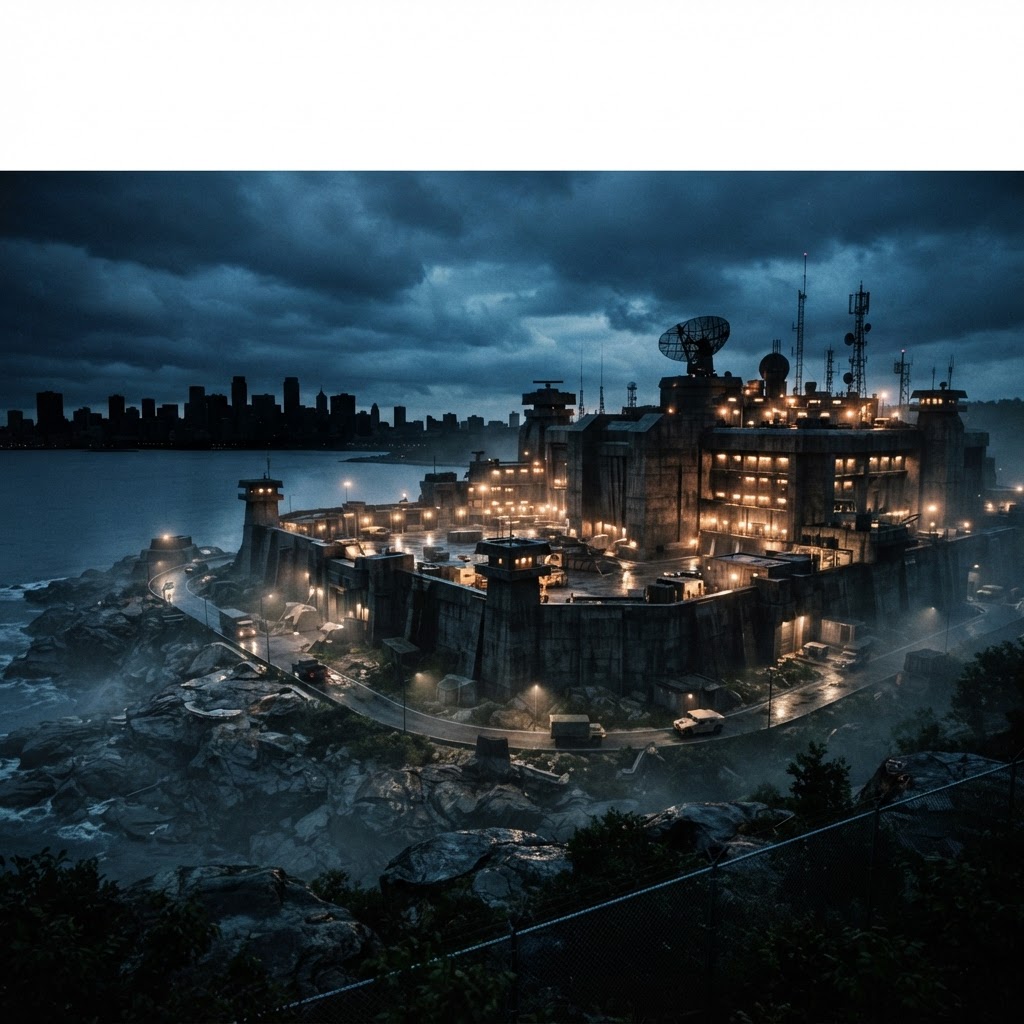
On September 30, 2026, the Pentagon unveiled a sweeping homeland defense directive known as FORTRESS America. Designed to harden national infrastructure against catastrophic power failures, cyberattacks, and supply chain bottlenecks, the initiative represents one of the largest strategic overhauls in modern military history. While official announcements frame the effort as an essential national insurance policy, viral posts across social media have sparked intense debate regarding what this massive hardening campaign means for everyday citizens. In this detailed guide, we examine the documented facts, internal memos, and popular theories surrounding the program to help readers understand its real implications. As an Amazon Associate we earn from qualifying purchases.
The Short Answer
Here is the short answer regarding the Pentagon program:
- What It Is: FORTRESS America stands for Federal Operations for Resilience, Troop Resources, Energy, Supply and Survivability, aimed at making military bases self-sufficient.
- The Key Goal: Ensuring around 500 continental installations can sustain independent operations for up to 90 days without civilian utilities during a national crisis.
- Core Technologies: Deployment of nuclear microreactors under the Janus Program, cyber hardening, and pre-designated commercial manufacturing networks.
What FORTRESS America Is and How It Started
The formal rollout of FORTRESS America began on September 30, 2026, when Defense Secretary Pete Hegseth delivered his State of the Force address at Marine Corps Base Quantico, Virginia. During the address, Hegseth introduced the program as a vital national insurance policy for the homeland under a rebranded Department of War. On October 6, 2026, a follow-up memo issued by Under Secretary Michael Duffey formally established the FORTRESS America Program Office, naming Richard 'Matt' O'Malley as interim director. Pentagon spokesperson Sean Parnell, widely described as the initiative's chief brainchild, summarized the core strategy succinctly: 'Power is combat now. Without electricity, you lose communications, water, logistics, assembly lines and just basic military command structures.'
Hegseth emphasized that self-reliance is the primary objective of the strategy. He stated: 'Every major military installation in America is going to generate its own power, independent of the civilian grid. If an adversary takes down the grid, our bases stay lit. Our aircraft keep flying. Our command centers never go dark.' This shift marks a departure from reliance on municipal infrastructure, moving toward fully autonomous military installations across the nation.
The Five Pillars of FORTRESS America
Official Pentagon documentation defines FORTRESS America through five core operational pillars. The official acronym stands for Federal Operations for Resilience, Troop Resources, Energy, Supply and Survivability, reflecting a comprehensive approach to homeland readiness.
- Energy Independence: Building localized microgrids and distributed power generation to disconnect base operations from commercial electric grids.
- Supply Chain and Defense Industrial Base Resilience: Securing critical material pipelines and stockpiling essential defense manufacturing resources.
- Strategic Defense Reserve: Maintaining pre-positioned stockpiles of fuel, replacement parts, and critical operational assets.
- Installation Hardening and Cyber Resilience: Fortifying physical structures and securing internal digital networks against advanced cyber threats.
- Space and Spectrum Resilience: Protecting satellite communications, GPS signals, and electromagnetic spectrum operations against jamming or orbital disruption.
Together, these five pillars form the blueprint for maintaining operational capabilities even if civilian infrastructure suffers complete disruption during a major crisis.
Essential Books on State Power and Hidden History
To better understand state power, emergency planning, and declassified military history, explore our curated selection of essential books below.
The 90-Day Off-Grid Baseline: Confirmed vs. Reported
Public attention surrounding FORTRESS America intensified on October 25, 2026, when Fox News published a report citing internal planning documents. The report stated that every major installation in the continental United States must sustain essential operations for at least 90 days without civilian power, fuel, water, or supply lines. Fact-checking organization Snopes rated the report 'mostly true,' noting that while internal planning documents describe the 90-day standard, the Department of Defense has not officially confirmed it as public policy.
The urgency behind the policy stems from years of intelligence warnings. In February 2024, CISA, the NSA, and the FBI warned that Chinese state-sponsored hackers known as Volt Typhoon had pre-positioned inside US communications, energy, transportation, and water systems to disrupt critical operations during a future conflict. Compounding public interest, foreign governments launched parallel preparedness campaigns around the same time. On October 22, 2026, the UK launched its 'Be Ready' campaign urging households to keep three days of emergency supplies, following EU 72-hour preparedness guidance released in March 2025. Readers interested in declassified records regarding historical emergency mandates will find valuable context in 63 Documents the Government Doesn't Want You to Read.
Nuclear Microreactors and the Manufacturing Network
A key technological component supporting FORTRESS America is the Army's Janus Program. In August 2026, the Army selected five commercial vendors to develop portable nuclear microreactors capable of generating independent power for defense installations. Initial deployments are slated for Fort Benning in Georgia, Fort Bragg in North Carolina, Fort Campbell in Kentucky, Fort Drum in New York, and Fort Hood in Texas. With budget allocations reaching up to $2.2 billion, defense planners intend to deploy at least 20 microreactors across critical bases nationwide.
In addition to nuclear power, the Pentagon has folded the Civil Reserve Manufacturing Network directly into FORTRESS America. This network pre-identifies commercial manufacturing facilities across the country that can rapidly pivot to defense production during a national emergency. By establishing pre-approved contracts and technical standards, defense planners aim to prevent industrial bottlenecks in times of war. For an in-depth analysis of how political and corporate power intersect during national emergencies, consult Hidden History.
Cost Estimates, Timelines, and Open Questions
Implementing FORTRESS America across the domestic military posture presents monumental logistical and economic challenges. Defense officials estimate that roughly 500 bases in the continental United States are currently undergoing comprehensive resilience assessments. These evaluations measure existing backup power, water storage capacity, cybersecurity defenses, and physical perimeter security.
Despite the initiative's broad scope, the Department of Defense has not released an official cost estimate or timeline. Defense officials privately acknowledge that full implementation could span several decades and require investment ranging from tens to hundreds of billions of dollars. Key open questions remain regarding legislative funding approvals, environmental reviews for microreactors, and how localized energy generation will integrate with regional utility grids.
What Theorists and Critics Say About FORTRESS America
Following media coverage of FORTRESS America, viral posts on Facebook, Instagram, and Reddit spread rapidly. Many online commentators framed the initiative around a ominous narrative, claiming that the military is hardening itself for an imminent grid-down war while leaving civilians on their own. These posts frequently suggest that base insulation proves the federal government anticipates a widespread infrastructure collapse.
Examining the documented record provides a more nuanced picture. While theorists focus on worst-case scenarios, official statements from Defense Secretary Hegseth frame the effort as deterrence. Hegseth explicitly argued that 'America cannot be starved out, shut down or cut off,' asserting that base survivability deters adversaries from attempting grid attacks in the first place. Researchers exploring how public anxiety shapes conspiracy narratives can examine historic patterns in The Conspiracy Book as well as our analytical overview in the Best New World Order Books guide.
How to Read the FORTRESS America Coverage
Navigating defense news requires distinguishing confirmed government memos from investigative reports and viral speculation. When evaluating news on FORTRESS America, readers should cross-reference official press releases from the Department of Defense against independent journalism and fact-checking reports. While social media discussions often highlight dramatic possibilities, grounding analysis in primary source documents offers a clearer view of national security policy. Analytical literature on government secrecy and military history provides essential frameworks for evaluating modern defense initiatives objectively.
Frequently Asked Questions
What does FORTRESS stand for in FORTRESS America?
The acronym stands for Federal Operations for Resilience, Troop Resources, Energy, Supply and Survivability. It represents the Pentagon's comprehensive framework for securing military installations against external grid failures and cyber threats.
Has the Pentagon confirmed the 90-day off-grid requirement?
While an October 25, 2026 Fox News report cited internal documents establishing a 90-day self-sufficiency mandate, the Department of Defense has not officially confirmed this standard publicly. Snopes rated the claim as mostly true based on internal planning sources.
What is the Janus Program under FORTRESS America?
The Janus Program is a $2.2 billion Army initiative launched in August 2026. It selected five commercial vendors to build at least 20 nuclear microreactors designed to supply independent, clean energy to major military bases such as Fort Bragg and Fort Hood.
Are civilian infrastructure networks included in the plan?
The primary focus of the program is securing military installations and base infrastructure. However, defense leaders argue that hardening military bases deters foreign attacks on civilian power grids by ensuring military readiness remains intact.
Why did cybersecurity warnings prompt this defense initiative?
In February 2024, agencies including CISA, the NSA, and the FBI revealed that Chinese Volt Typhoon hackers had pre-positioned inside US critical infrastructure. These warnings accelerated military efforts to insulate defense assets from potential utility disruption.
The Bottom Line
FORTRESS America represents a landmark pivot in American homeland defense, shifting military installations toward complete operational self-reliance. By combining nuclear microreactors, 90-day off-grid capability standards, and defense manufacturing networks, the Pentagon aims to ensure military readiness during national emergencies. While viral theories raise questions regarding public preparedness, official records demonstrate a clear focus on strategic deterrence and base resilience. To explore more literature on national security, cover-ups, and political history, visit our comprehensive catalog today.
